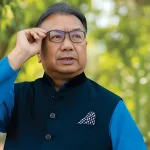

When Sumana Shrestha took her parliamentary oath in Nepal Bhasa on 22 December 2022, she represented more than personal achievement. Sumana Shrestha is a prominent Nepali politician, Member of Parliament for the Rastriya Swatantra Party (RSP), and former Minister of Education, Science and Technology, distinguished by her data-driven governance approach and international expertise. Her transformation from a successful MIT MBA graduate to Nepal’s federal parliament demonstrates the changing face of contemporary Nepali politics.
The question of who is Sumana Shrestha in Nepal reflects growing interest in leaders who combine global education with local commitment. Her transition from international consulting to parliamentary leadership challenges traditional political pathways in the world’s newest federal republic.
Key Facts at a Glance
| Attribute | Value |
|---|---|
| Full Name | Sumana Shrestha |
| Born | 1 October 1984 (Age 40) |
| Birthplace | Kathmandu, Bagmati Province, Nepal |
| Political Party | Rastriya Swatantra Party (RSP) |
| Current Position | Member of Parliament, House of Representatives |
| Education | MBA (MIT Sloan School of Management), BA in Economics and Mathematics (Bryn Mawr College) |
| Spouse | Biraj Bhakta Shrestha (fellow RSP MP) |
| Notable Roles | Former Minister of Education, Science and Technology (March-July 2024) |
| Professional Background | Management consultant, entrepreneur, former Boston Consulting Group (BCG) consultant |
| Key Initiatives | Carpool Kathmandu founder, Medication For Nepal |
| Parliamentary Role | Elected as proportional representative for Adivasi Janajati community |
Early Life and Elite Education: From Kathmandu to Cambridge
Sumana Shrestha was born on 1 October 1984, in Kathmandu, the bustling capital of Nepal’s Bagmati Province. Her early education took place at Saraswati Boarding Higher Secondary School in Chhetrapati, one of Kathmandu’s established neighborhoods. She completed her A-Levels in Economics and Mathematics at Budhanilkantha School, setting the foundation for her analytical approach to problem-solving.
Her academic excellence became evident during her undergraduate studies in the United States. She graduated magna cum laude from Bryn Mawr College with a Bachelor of Arts degree in Economics and Mathematics, demonstrating the rigorous analytical skills that would later define her political approach.
The MIT Advantage: Building Global Perspective
The defining chapter of Sumana Shrestha’s educational background came at the prestigious MIT Sloan School of Management, where she earned her Master of Business Administration. This Sumana Shrestha MIT MBA credential represents more than academic achievement—it provided her with management frameworks and analytical tools rarely seen in Nepali politics.
Educational Impact: Her MIT education equipped her with data-driven decision-making methodologies that she later applied to parliamentary work and ministerial duties, distinguishing her from colleagues with traditional political backgrounds.
Professional Excellence: From Wall Street to Social Innovation
Before her political career, Sumana Shrestha established herself in international finance and consulting. Her professional experience included roles as a Consultant at Boston Consulting Group (BCG) and as a trader and financial analyst at Citigroup, where she worked for three years until 2010.
Her career took a decisive turn in May 2015. BCG sent her to work with the World Food Programme for three months during Nepal’s post-earthquake emergency response. Instead of returning to her US-based position, she chose to remain in Nepal, marking her commitment to national development.
Entrepreneurial Solutions: Carpool Kathmandu and Beyond
As a management consultant entrepreneur, Sumana Shrestha founded several initiatives addressing immediate Nepali challenges. Carpool Kathmandu, launched during Nepal’s 2015 blockade-induced fuel crisis, exemplified her approach of applying business solutions to social problems. She also established Medication For Nepal to ensure access to medicines for vulnerable populations.
Her work extended to heritage conservation in the heart of Kathmandu, where she chaired management sub-committees for the iconic Kasthamandap Reconstruction Committee, located in the Kathmandu Durbar Square UNESCO World Heritage site, and the historic Rani Pokhari restoration projects, demonstrating her commitment to preserving Nepal’s cultural heritage.
Political Entry: The RSP Wave and Parliamentary Success
Sumana Shrestha entered Nepali politics through the newly formed Rastriya Swatantra Party (RSP) led by Rabi Lamichhane. On 14 December 2022, she was elected as a House of Representatives member through the proportional representation indigenous community quota, representing the Adivasi Janajati constituency.
Her parliamentary debut was memorable. During her inaugural address on 21 January 2023, she advocated for establishing a parliamentary calendar to improve legislative efficiency. Her criticism of colleagues who referred to women representatives as “cheli” (daughter) garnered national attention and established her voice on gender equality in politics.
Active Parliamentary Performance
Sumana Shrestha’s parliamentary performance reflects her analytical background. On 18 February 2023, she submitted 34 comprehensive amendments to the Federal Parliament Secretariat, focusing on expert participation in parliamentary committees and streamlined business procedures.
Her innovative “Bill Hackathon” proposal, published on 16 February 2023, demonstrated her commitment to citizen engagement in lawmaking. The Sumana Shrestha Secretariat, established to support her parliamentary work, created virtual platforms using Google Docs to solicit public feedback during bill amendments. This novel approach resulted in the collection of hundreds of public suggestions for key legislation, including the “Bill to Amend the Act Relating to Prevention of Money Laundering and Promotion of Business Environment,” setting a new precedent for participatory governance in Nepal.
Minister of Education: Reform Efforts and Systemic Challenges
Sumana Shrestha was appointed Minister of Education, Science and Technology on 6 March 2024 in Prime Minister Pushpa Kamal Dahal’s coalition government. Her appointment marked a significant moment for education reform in Nepal, bringing technocratic expertise to a ministry long dominated by traditional political appointees. As the Sumana Shrestha Education Science Technology Minister Nepal looked to implement reforms, she faced considerable resistance from established interests.
Bold Reform Initiatives
As Former Education Minister Nepal, she initiated controversial but necessary changes. She began investigating teachers and professors involved in party politics, requesting information from the Election Commission and district education units. This action, legally justified under the Political Parties Act 2017, faced resistance from major political parties.
Her approach to the school education bill reflected her analytical mindset. Before becoming minister, she had objected to several bill provisions, arguing they neither boosted education quality nor aligned with constitutional principles. As minister, she maintained that educational policies required comprehensive provincial consultation.
Political Resistance and Departure
Her reform efforts faced significant opposition. Traditional political parties criticized her decisions, with leaders questioning her understanding of Nepal’s education sector despite her foreign education credentials. Her tenure ended in July 2024 following changes in the government’s ruling coalition, with Raghuji Panta succeeding her as Education Minister.
Reform Legacy: Despite her brief tenure, Shrestha’s efforts highlighted systemic challenges in Nepal’s education sector and demonstrated the difficulty of implementing merit-based reforms within entrenched political-bureaucratic structures.
Marriage and Personal Life: A Political Partnership
Sumana Shrestha is married to Biraj Bhakta Shrestha, a fellow Rastriya Swatantra Party MP elected from Kathmandu-8. Prior to her marriage to Biraj Bhakta Shrestha, her former spouse was Pawel Skawinski. Their current marriage represents a unique political partnership within the same party, both bringing professional expertise to parliamentary work. Biraj Bhakta Shrestha served as Minister of Youth and Sports alongside her education ministry role.
Regarding Sumana Shrestha children, there is no publicly available information confirming that she has children. She maintains privacy regarding family matters while focusing public attention on her political and policy contributions.
Internal Party Dynamics and Leadership Challenges
In April 2025, Sumana Shrestha resigned from her position as RSP joint general secretary, citing her decision to party chair Rabi Lamichhane. The Sumana Shrestha RSP joint general secretary resignation came amid reported tensions over her independent activities and efforts to build a separate organizational team.
Subsequent media reports, citing party sources, highlighted concerns regarding her traveling to various districts without prior coordination with party leadership, which fueled internal debate about party discipline and unified messaging. Her resignation reflected broader challenges within the RSP as it navigates its role as Nepal’s fourth-largest political force.
Parliamentary Contributions and Policy Innovation
Sumana Shrestha’s approach to legislation emphasizes evidence-based policymaking. Her work on the Food Hygiene and Quality Bill amendments and contributions to anti-money laundering legislation demonstrate her focus on regulatory efficiency and economic development.
Her advocacy for direct public involvement in legislative processes represents a democratic innovation. The virtual platforms created by her secretariat enabled citizens to provide input during bill amendment processes, setting precedents for participatory governance in Nepal’s federal parliament.
Frequently Asked Questions
Q: Who is Sumana Shrestha?
A: Sumana Shrestha is a Nepali politician, Member of Parliament for the Rastriya Swatantra Party, and former Minister of Education, Science and Technology.
Q: What is Sumana Shrestha’s age and date of birth?
A: Sumana Shrestha was born on 1 October 1984, making her 40 years old.
Q: Where is Sumana Shrestha’s birthplace?
A: Sumana Shrestha was born in Kathmandu, the capital city of Nepal’s Bagmati Province.
Q: What is Sumana Shrestha’s educational background?
A: She holds an MBA from MIT Sloan School of Management and a bachelor’s degree in Economics and Mathematics from Bryn Mawr College.
Q: Is Sumana Shrestha married?
A: Yes, Sumana Shrestha is married to Biraj Bhakta Shrestha, who is also a Member of Parliament from the RSP.
Q: What is Sumana Shrestha known for professionally?
A: She is known for her management consultant background, including work at Boston Consulting Group, and founding social initiatives like Carpool Kathmandu.
Q: Why is Sumana Shrestha no longer Education Minister?
A: Her tenure as Minister of Education, Science and Technology ended in July 2024 following changes in the government’s ruling coalition.
Q: Which political party does Sumana Shrestha represent?
A: She represents the Rastriya Swatantra Party (RSP), though she resigned from her joint general secretary position in 2025.
Contemporary Relevance and Future Impact
Sumana Shrestha represents a significant experiment in technocratic leadership within Nepal’s political system. Her emphasis on data-driven policymaking, citizen engagement through technology, and institutional reform challenges conventional political approaches in the Himalayan nation.
Her brief but impactful tenure as Education Minister demonstrated both the potential and limitations of reform-oriented leadership. The resistance she encountered from established interests underscores the complexity of implementing systemic changes within Nepal’s entrenched political and bureaucratic structures.
The Sumana Shrestha biography illustrates broader questions about Nepal’s democratic development. Can globally educated professionals effectively navigate local political realities? Her ongoing parliamentary work provides valuable insights into this critical question for Nepal’s future governance.
As Nepal continues addressing development challenges in the 21st century, leaders like Sumana Shrestha—who combine international expertise with local commitment—represent new possibilities for evidence-based governance. Her continued presence in the Federal Parliament of Nepal offers an ongoing case study in whether technocratic approaches can gain sustainable traction in Nepal’s evolving democracy.
Her story ultimately raises fundamental questions about political change: Whether professional expertise and global educational credentials can translate into effective governance within Nepal’s complex socio-political landscape remains an open question, with Sumana Shrestha serving as a prominent test case for this democratic evolution.
Note: Information about Sumana Shrestha net worth is not publicly available from verified sources and therefore not included in this biographical assessment.