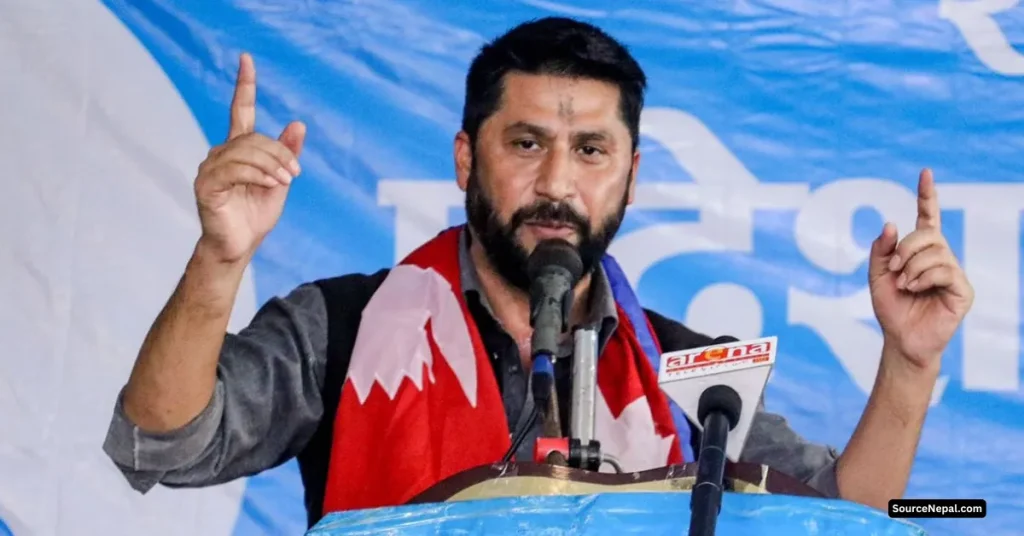
The arrest of Rabi Lamichhane on April 4, 2024, in connection with a cooperative fraud case sent shockwaves through Nepal’s political establishment. Here was a man who had single-handedly challenged the country’s entrenched power structures, now facing the very justice system he had spent years scrutinizing on national television.
Rabi Lamichhane is a prominent Nepali politician and former television journalist who currently serves as Chairman of the Rastriya Swatantra Party (RSP) and Member of the House of Representatives. Born on September 5, 1974, in Bhaktapur, Bagmati Province, Nepal, he gained nationwide recognition through his investigative television program Sidha Kura Janata Sanga and previously served as Deputy Prime Minister and Home Minister of Nepal. His transformation from media personality to political leader represents one of the most dramatic shifts in contemporary Nepali politics.
Key Facts at a Glance
| Attribute | Value |
|---|---|
| Full Name | Rabi Lamichhane |
| Born (Age) | September 5, 1974 (50 years old as of July 2025) |
| Nationality | Nepali |
| Birthplace | Bhaktapur, Bagmati Province, Nepal |
| Father | Lal Chandra Lamichhane |
| Occupation | Politician, Former Journalist |
| Active Years | Journalism: 2013-2022; Politics: 2022-Present |
| Current Status | In judicial custody (as of July 2024) |
| Declared Assets | Over NPR 27 crore under investigation |
| Notable For | RSP Chairman, Sidha Kura Janata Sanga host, Guinness World Record holder |
| Spouse | Nikita Poudel Lamichhane (m. 2019), Isha Lamichhane (m. 1995–2019) |
| Political Party | Rastriya Swatantra Party (RSP) |
| Election Symbol | Ghanti (Bell) |
| Constituency | Chitwan-2 |
| Key Positions | Deputy Prime Minister, Home Minister, RSP Chairman |
Early Life & Roots in Bhaktapur
Rabi Lamichhane was born on September 5, 1974, in Bhaktapur, Nepal, into a middle-class family. His father, Lal Chandra Lamichhane, raised him in the historic city known for its ancient temples and traditional craftsmanship, including the iconic Nyatapola Temple. Growing up in Bhaktapur exposed young Rabi to the cultural richness of the Kathmandu Valley, values that would later influence his commitment to preserving Nepal’s identity.
Rabi Lamichhane’s education began at Bhrikuti Secondary School in Bhaktapur. He excelled academically, passing his SLC examination in first division. His teachers remember him as a student deeply interested in literature and art. After completing his school-leaving certificate, he enrolled at Ratna Rajya Campus in Kathmandu for higher studies in journalism and mass communication.
His interest in media was sparked by family connections to broadcasting. His brother Harisharan Lamichhane worked as a news anchor at Radio Nepal, providing the first glimpse into the world of media that would later define Rabi’s career. However, financial constraints forced him to seek opportunities abroad.
The American Years
Lamichhane moved to the United States in the 1990s, initially traveling on a visitor visa. He worked various jobs, including as a manager at a Subway restaurant chain in Baltimore. He acquired American citizenship in 2007. Under Nepali law, his Nepali citizenship was automatically annulled upon acquiring foreign citizenship. He renounced his American citizenship in 2017. During this decade in America, he completed his master’s degree in journalism and mass communication, skills that would prove invaluable upon his return to Nepal.
Media Career & Rise to National Prominence
Breaking the World Record
Lamichhane’s return to Nepal marked the beginning of a media career that would transform him into a household name. His breakthrough came with an ambitious attempt to set a Guinness World Record for the longest television talk show.
On April 12, 2013, Rabi Lamichhane hosted a continuous talk show for 62 hours and 12 minutes on News24 Nepal. The program, themed “Buddha Was Born in Nepal,” surpassed the previous record of 52 hours set by Ukrainian presenters. During the marathon broadcast, he interviewed politicians, journalists, and celebrities while taking calls from viewers across the country.
This record-breaking achievement established Lamichhane as more than just another television host. It demonstrated his dedication to promoting Nepal’s cultural identity and his ability to connect with audiences for extended periods.
Sidha Kura Janata Sanga: Redefining Investigative Journalism
The program that truly made Rabi Lamichhane a media phenomenon was Sidha Kura Janata Sanga (Straight Talk with the People). Launched on News24 Nepal, the show revolutionized investigative journalism in Nepal by directly confronting alleged wrongdoers on camera.
The program’s format involved Lamichhane following up on complaints from ordinary citizens, particularly victims of fraud or corruption. He would then confront the accused parties directly, often leading to dramatic confrontations that captivated viewers. This approach, similar to the sting journalism pioneered by Indian publication Tehelka, resonated deeply with Nepalis who felt ignored by traditional media.
Rabi Lamichhane’s Facebook following exceeded one million users, surpassing even established political leaders like KP Sharma Oli and Sher Bahadur Deuba. His direct communication style and willingness to challenge powerful figures made him a voice for the voiceless across Nepal.
The show’s impact extended beyond entertainment. Government officials, business leaders, and politicians began to fear the possibility of being featured on Sidha Kura Janata Sanga, knowing that Lamichhane’s investigation could expose their misdeeds to millions of viewers.
Lamichhane later moved the show to Galaxy 4K TV, renaming it simply Sidha Kura. On June 16, 2022, he announced his resignation from television to enter politics, marking the end of an era in Nepali media.
Political Career & the Rastriya Swatantra Party
Formation of RSP
Rabi Lamichhane announced the formation of the Rastriya Swatantra Party on June 21, 2022. The party name, meaning “National Independent Party,” reflected his vision of politics free from traditional party allegiances and foreign influence.
The Election Commission of Nepal registered the party with the ghanti (bell) as its election symbol. This choice proved strategically brilliant, as the bell represented the party’s call to “wake up” Nepal from political complacency. The symbol became instantly recognizable across the country, particularly among younger voters disillusioned with established parties.
Electoral Success in Chitwan-2
Lamichhane chose to contest from Chitwan-2 constituency, a decision that would prove politically astute. In the 2022 general election, Rabi Lamichhane won with a commanding majority of 34,312 votes. He defeated Nepali Congress candidate Umesh Shrestha, an incumbent minister of state, and CPN-UML’s Krishna Bhakta Pokhrel.
The Rastriya Swatantra Party’s overall performance exceeded all expectations. Winning 20 seats combined from first-past-the-post and proportional representation categories, RSP became the fourth-largest party in Nepal’s 275-member House of Representatives.
Deputy Prime Minister and Home Minister
Rabi Lamichhane’s appointment as Deputy Prime Minister and Home Minister represented the pinnacle of his rapid political ascent. Following the 2022 elections, RSP supported Pushpa Kamal Dahal’s bid for Prime Minister. In return, Lamichhane was sworn in as Deputy Prime Minister and Home Minister on December 26, 2022.
At 48 years old, he brought a youthful energy to Nepal’s traditionally gerontocratic political system. His appointment was seen as a victory for those seeking change from the established political order dominated by the Nepali Congress, CPN-UML, and Maoist parties.
During his tenure as Home Minister, Lamichhane focused on police reforms and improving law enforcement. However, his time in office was cut short by legal challenges that would define the next phase of his political career.
Legal Battles & Citizenship Controversy
The Dual Citizenship Case
The most significant legal challenge that ended Rabi Lamichhane’s ministerial career was the citizenship dispute that came to light during his 2022 electoral campaign. A complaint filed against his candidacy claimed that Lamichhane had failed to follow proper procedures when reacquiring Nepali citizenship after renouncing his American citizenship.
The case centered on Nepal’s citizenship laws, which prohibit dual citizenship. Lamichhane had acquired American citizenship in 2007 and held it until 2017, during which time his Nepali citizenship was automatically invalidated. Upon renouncing his American citizenship, he was required to apply for Nepali citizenship through proper channels, which he failed to do.
On January 27, 2023, the Supreme Court of Nepal delivered a landmark ruling. The court found that Lamichhane had not followed due process to reacquire his Nepali citizenship and was therefore not a legal citizen of Nepal. This decision stripped him of his positions as Deputy Prime Minister, Home Minister, and Member of Parliament.
Citizenship Reacquisition
The citizenship reacquisition process became a dramatic public spectacle. On January 29, 2023, Lamichhane appeared at the Kathmandu District Administration Office to formally reapply for Nepali citizenship. Within hours of receiving his citizenship certificate, the RSP central committee reinstated him as party chairman.
The Chitwan-2 constituency seat became vacant following the Supreme Court’s ruling, necessitating a by-election. After reacquiring his citizenship, Rabi Lamichhane contested the April 2023 by-election and won with an even larger margin than his original victory. This result demonstrated that his legal troubles had not diminished his popularity among voters.
Cooperative Fraud Case & Current Legal Status
The Parliamentary Investigation
The cooperative fraud case represents the most serious legal challenge currently facing Rabi Lamichhane. In May 2024, Nepal’s Parliament formed a special committee to investigate fraud and embezzlement in the country’s cooperative sector.
The investigation focused on the Gorkha Media Network, which operated Galaxy 4K Television channel. Lamichhane is accused of siphoning funds from multiple cooperatives, including Supreme Cooperative, to finance the media company’s operations. The parliamentary committee found evidence suggesting that Lamichhane, along with GB Rai and former Deputy Inspector General Chhabilal Joshi, operated joint accounts to manage cooperative funds.
Arrest and Judicial Custody
On April 4, 2024, Rabi Lamichhane was arrested from his residence following a Tulsipur High Court order. The Butwal bench of the high court had overturned a previous bail decision by Rupandehi District Court, ordering his detention in connection with the Supreme Cooperative case.
The charges against him include fraud and organized crime related to the alleged embezzlement of millions of rupees from cooperative funds. On May 23, 2024, the Supreme Court of Nepal upheld the High Court’s decision, dismissing a habeas corpus petition filed by his wife, Nikita Poudel Lamichhane. The court stated that there was sufficient prima facie evidence of his involvement in the alleged crimes.
Money Laundering Charges
Additional legal troubles emerged when the Department of Money Laundering Investigation filed charges against both Rabi Lamichhane and his wife in December 2024. The case involves allegations of undisclosed assets worth Rs 27 crore 89 lakh 44 thousand 705 (approximately $2.1 million USD). Authorities claim that Lamichhane failed to provide adequate explanations for the source of these funds.
Personal Life & Family
First Marriage and Divorce
Rabi Lamichhane’s first marriage was to his school sweetheart, Isha Lamichhane, in 1995. The couple had two daughters during their 24-year marriage. Their relationship ended in divorce in 2019, following a separation that had lasted several years.
The divorce proceedings attracted considerable media attention, partly due to Lamichhane’s public profile and partly because of questions surrounding his American citizenship that emerged during the process.
Marriage to Nikita Poudel
On January 21, 2019, Rabi Lamichhane married Nikita Poudel in a court ceremony at Kathmandu District Court. Nikita Poudel, daughter of film producer Uddhav Poudel, was serving as chairperson of the Nepal Film Development Board at the time of their marriage.
Both Lamichhane and Nikita Poudel were divorced with children from their previous marriages. Nikita Poudel had been married to Abhaya Shah and has a daughter named Abhanika Shah.
Nikita Poudel is an accomplished film producer who has worked on several Nepali films, including Kusume Rumal 2, Sundar Mero Naam, and Preeti Ko Phool. She was the first woman to serve as chairperson of the Nepal Film Development Board, appointed in December 2017.
Public Perception and Support
Despite his legal troubles, Rabi Lamichhane maintains significant public support. The Rastriya Swatantra Party has organized signature campaigns and solidarity gatherings across Nepal, with booths established in major cities including Kathmandu, Bhaktapur, and Patan.
However, his public image has also faced criticism. Some observers have raised concerns about the “cult of personality” that developed around Lamichhane, questioning whether his media popularity translated into effective governance.
Current Status & Political Future
Leadership from Custody
As of July 2024, Rabi Lamichhane remains in judicial custody pending the outcome of his trial. The Supreme Court has ruled that he will remain detained until the Rupandehi District Court delivers its verdict on the cooperative fraud case.
Despite his incarceration, Lamichhane continues to influence political discourse through his party. He temporarily stepped down as RSP chairman in December 2024 but resumed the position in March 2025, with vice-president DP Aryal serving as acting chairman during his absence.
Constitutional and Democratic Stance
From custody, Rabi Lamichhane has continued to advocate for Nepal’s constitutional framework and democratic system. In statements to party members, he has emphasized RSP’s commitment to the current constitution and rejected suggestions that the party poses a threat to Nepal’s democratic institutions.
His supporters argue that the legal cases against him represent attempts by established political parties to eliminate their most potent challenger. Critics counter that his legal troubles demonstrate the importance of accountability, regardless of political popularity.
Frequently Asked Questions
Q: Who is Rabi Lamichhane’s wife? A: Rabi Lamichhane is married to Nikita Poudel Lamichhane, a film producer and former chairperson of the Nepal Film Development Board.
Q: When was the Rastriya Swatantra Party formed? A: The Rastriya Swatantra Party was officially formed on June 21, 2022.
Q: What is the election symbol of the Rastriya Swatantra Party? A: The RSP’s election symbol is the ghanti (bell), which represents the party’s call to awaken Nepal from political complacency.
Q: Where did Rabi Lamichhane win his parliamentary seat? A: He won his parliamentary seat from the Chitwan-2 constituency in both the 2022 general election and the 2023 by-election.
Q: What was Rabi Lamichhane’s profession before politics? A: Before entering politics, he was a television journalist best known for hosting the investigative program Sidha Kura Janata Sanga.
Q: What is the citizenship controversy about? A: The controversy arose because Lamichhane failed to follow proper legal procedures when reacquiring Nepali citizenship after renouncing his American citizenship.
Q: What legal cases is Rabi Lamichhane currently facing? A: He faces charges related to cooperative fraud, money laundering, and organized crime in connection with the Supreme Cooperative case.
Impact on Nepal’s Political Landscape
Rabi Lamichhane’s rise from television journalist to major political figure represents a fundamental shift in Nepal’s political culture. His success demonstrated that media influence could translate directly into political power, challenging the dominance of traditional political dynasties.
The Rastriya Swatantra Party’s emergence as the fourth-largest party in Parliament sent shockwaves through Nepal’s established political order. The party’s appeal to younger voters and those disillusioned with traditional politics highlighted deep frustrations with the existing system.
His investigative journalism through Sidha Kura Janata Sanga established new standards for accountability in Nepali media. The program’s format of directly confronting alleged wrongdoers became a template for public interest journalism that other media outlets began to emulate.
Lasting Questions
The ongoing legal proceedings will determine not only Rabi Lamichhane’s personal future but also the trajectory of political reform in Nepal. His supporters view him as a victim of a system determined to silence challengers to established power. Critics argue that his legal troubles demonstrate the importance of institutional accountability.
Whether remembered as a champion of anti-corruption efforts or as a controversial figure who became entangled in the systems he sought to reform, Lamichhane’s story continues to influence discussions about governance, media ethics, and political change in Nepal.
His transformation from media crusader to political leader reflects both the possibilities and perils of Nepal’s evolving democracy, where public communication, popular discontent, and political ambition intersect in ways that continue to reshape the nation’s political discourse.
This article incorporates information from multiple verified sources including The Kathmandu Post, myRepublica, Wikipedia, and official records from Nepal’s Election Commission and Supreme Court, ensuring accuracy and comprehensive coverage of Rabi Lamichhane’s life and career.