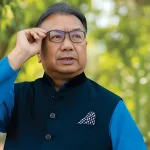

On a sweltering August afternoon in 2008, Pushpa Kamal Dahal stood before Nepal’s Constituent Assembly to take his oath as the country’s first Prime Minister of the Federal Democratic Republic. The 53-year-old former underground commander, known by his fierce nom de guerre “Prachanda,” had traded his guerrilla fatigues for formal political attire. This moment captured more than a personal transformation—it marked Nepal’s complete break from 240 years of monarchical rule and the birth of a modern republic.
Pushpa Kamal Dahal, widely known as Prachanda, is a prominent Nepali politician who has served as Prime Minister of Nepal three times and led the Communist Party of Nepal (Maoist Centre) through the country’s most turbulent political transformation. His role in ending Nepal’s monarchy and establishing democratic institutions makes him one of the most significant figures in contemporary Nepali politics.
Key Facts at a Glance
| Attribute | Details |
|---|---|
| Full Name | Pushpa Kamal Dahal (born Ghanashyam Dahal) |
| Born (Age) | December 11, 1954 (70 years old as of 2025) |
| Nationality | Nepali |
| Birthplace | Lewade, Dhikur Pokhari VDC, Kaski District, Gandaki Province, Nepal |
| Current Position | Leader of Opposition (since July 2024) |
| Political Party | Communist Party of Nepal (Maoist Centre) |
| Terms as PM | Three times: 2008-2009, 2016-2017, 2022-2024 |
| Education | Diploma in Agriculture (IAAS, Tribhuvan University), Patan Multiple Campus |
| Parents | Muktiram Dahal (father), Bhawani Dahal (mother) |
| Siblings | Dr. Ganga Ram Dahal (brother, research scientist) |
| Spouse | Sita Dahal (married 1969; died July 12, 2023) |
| Children | Gyanu Dahal (deceased 2014), Renu Dahal, Ganga Dahal, Prakash Dahal (deceased 2017) |
| Religion | Atheist (stopped practicing Hinduism in teenage years) |
| Notable For | Leading the Maoist insurgency, Nepal peace process, establishing federal republic |
Early Life in the Hills of Kaski
Pushpa Kamal Dahal was born as Ghanashyam Dahal on December 11, 1954, in the small village of Lewade in Dhikur Pokhari VDC, located about 20 kilometers north of Pokhara in Kaski District. The mountainous terrain of Gandaki Province shaped his early worldview, exposing him to the harsh realities faced by Nepal’s rural population.
His father, Muktiram Dahal, struggled to support the family through subsistence farming. In the 1950s, Muktiram worked as a firewood collector in Assam, India, returning to Nepal in 1961. When Prachanda was eight years old, his family migrated to Chitwan District in the fertile Terai plains, seeking better opportunities in the newly opened lands.
The young Dahal changed his name from Ghanashyam to Pushpa Kamal during his matriculation examination, choosing a name that means “lotus flower” in Nepali. This early act of self-reinvention foreshadowed his later adoption of revolutionary identities.
His brother, Dr. Ganga Ram Dahal, pursued academic excellence, graduating from the University of Reading in the UK and currently works as a research scientist with Rights to Resources International in Bangkok. This family background of education and social awareness influenced Prachanda’s intellectual development.
Education and Political Awakening
Prachanda’s education began in local schools in Chitwan before he moved to Kathmandu in 1971 to attend Patan Multiple Campus under Tribhuvan University for two years. He then returned to Chitwan to complete his agricultural studies.
In 1975, he graduated from the Institute of Agriculture and Animal Science (IAAS) in Rampur, Chitwan, with a diploma in agriculture. This technical education connected him with rural development issues and agricultural challenges facing Nepali farmers.
Unable to secure government employment despite his qualifications, Prachanda worked as a schoolteacher in rural Gorkha from 1975 to 1979. This experience in remote mountain communities deepened his understanding of inequality and government neglect in rural Nepal.
The poverty and social injustice he witnessed during his youth drew him toward leftist ideology. In 1981, Prachanda joined the underground Communist Party of Nepal (Fourth Convention), beginning his long association with revolutionary politics.
Rise Through Communist Ranks
Prachanda’s ascent within Nepal’s fragmented communist movement was remarkable for its speed and strategic vision. During the 1980s, when political parties were banned under the Panchayat system, he operated in secrecy while building his revolutionary credentials.
He became general secretary of the Communist Party of Nepal (Mashal) in 1989, positioning himself as a key figure in the radical wing of Nepal’s communist movement. The party name “Mashal,” meaning “flame” in Sanskrit, reflected its revolutionary ambitions.
Through various mergers and splits, Prachanda formed the Communist Party of Nepal (Maoist) in March 1995. This organization would become the vehicle for Nepal’s most significant political transformation.
The Meaning of Prachanda and Revolutionary Identity
The nom de guerre “Prachanda” means “fierce” or “terrible” in Nepali, perfectly capturing his uncompromising approach to revolutionary politics. This name became synonymous with Nepal’s decade-long civil conflict and subsequent democratic transformation.
His adoption of this revolutionary identity reflected a complete commitment to armed struggle. During the insurgency, Prachanda spent approximately eight years living underground in India, coordinating military strategy while evading capture by Nepali security forces.
Leading the People’s War: The Maoist Insurgency
On February 13, 1996, Prachanda launched the Jana Yuddha (People’s War) with coordinated attacks on police stations in Rolpa, Rukum, and Sindhuli districts. This marked the beginning of Nepal’s most violent political conflict since unification.
The insurgency emerged from 40 demands presented to the government by Dr. Baburam Bhattarai, including issues of nationalism, democracy, and economic justice. When the government failed to address these concerns, Prachanda’s role in the Maoist insurgency escalated into full-scale armed rebellion.
The Nepal Civil War lasted ten years and cost more than 17,000 lives, fundamentally altering the country’s political landscape. Prachanda’s military strategy focused on controlling rural areas first, then encircling urban centers—a tactic adapted from Chinese revolutionary experience.
The insurgency’s success lay in mobilizing marginalized communities. Women comprised one-fifth to one-third of Maoist combatants, while the movement attracted significant support from dalits, ethnic minorities, and economically disadvantaged groups historically excluded from power.
The Prachanda Path: Revolutionary Theory for Nepal
In 2001, Prachanda developed the theoretical framework known as “Prachanda Path” (प्रचण्डपथ), adapting Marxism-Leninism-Maoism to Nepal’s specific conditions. This ideology became the guiding principle of the Communist Party of Nepal (Maoist).
The Prachanda Path emphasized controlling rural areas before encircling urban settlements, recognizing Nepal’s unique geographical and social structure. Senior Maoist leader Mohan Vaidya explained: “Just as Marxism was born in Germany, Leninism in Russia and Maoism in China, Prachanda Path is Nepal’s identity of revolution.”
The ideology combined protracted people’s war strategy with Nepal’s federal aspirations. Maoism in Nepal under Prachanda’s leadership addressed specific issues of ethnic inclusion, caste discrimination, and regional autonomy that traditional Marxist theory had not fully encompassed.
The Peace Process and Democratic Transition
The Comprehensive Peace Accord signed on November 21, 2006, marked Prachanda’s transformation from insurgent leader to mainstream politician. His decision to negotiate peace demonstrated remarkable pragmatism, choosing democratic participation over continued warfare.
The peace process required difficult compromises. Prachanda agreed to integrate approximately 19,000 Maoist combatants into Nepal’s security forces or rehabilitation programs, a complex undertaking that tested his leadership and commitment to democratic norms.
In the April 2008 Constituent Assembly elections, the CPN (Maoist Centre) under Prachanda’s leadership won 220 seats, becoming the largest party in the 601-member assembly. His personal victory in Kathmandu constituency-10, where he received nearly twice as many votes as his nearest rival, demonstrated his broad political appeal.
How Many Times Did Pushpa Kamal Dahal Become Prime Minister?
Pushpa Kamal Dahal has served as Prime Minister of Nepal three times, each term reflecting different phases of his political evolution and Nepal’s democratic development.
First Term: Making History (2008-2009)
On August 15, 2008, Prachanda was elected as Nepal’s first Prime Minister of the Federal Democratic Republic, taking his oath at Singha Durbar three days later. This historic moment marked the complete transformation of Nepal’s political system.
His inaugural address emphasized national unity, economic development, and inclusive governance. However, his first term ended abruptly in May 2009 when he attempted to dismiss army chief General Rookmangud Katawal, who had refused to integrate Maoist combatants into the national army. President Ram Baran Yadav overturned the decision, leading to Prachanda’s resignation on May 4, 2009.
Second Term: Coalition Politics (2016-2017)
Prachanda returned as Prime Minister in August 2016 through a power-sharing agreement with the Nepali Congress. This arrangement demonstrated the political maturity that had developed in Nepal’s democratic system.
True to the rotational agreement, he resigned on May 24, 2017, making way for Congress leader Sher Bahadur Deuba. This peaceful transition reinforced democratic institutions and coalition governance practices.
Third Term: Complex Alliances (2022-2024)
Following the 2022 general election, Prachanda became Prime Minister for the third time on December 25, 2022, initially governing with support from CPN (UML) and smaller parties. His coalition-building skills were tested as political alliances shifted repeatedly.
His third tenure ended on July 12, 2024, when he lost a vote of confidence in Parliament. Of 258 members present, 194 voted against him, forcing his resignation and transition to Leader of Opposition.
Personal Life: Family and Tragedy
Prachanda married Sita Poudel in 1969 when he was just 15 years old. Sita, who became Sita Dahal, was more than a politician’s wife—she was a trusted comrade who supported the revolutionary movement through its most dangerous phases.
The Prachanda family includes four children: Gyanu Dahal, Renu Dahal, Ganga Dahal, and Prakash Dahal. However, profound personal tragedies have marked recent years.
Prachanda’s son Prakash Dahal died of cardiac arrest in 2017, a loss that devastated the family. His eldest daughter Gyanu Dahal died of breast cancer in 2014. Most recently, Prachanda’s wife Sita Dahal passed away on July 12, 2023, at age 69 after battling Progressive Supranuclear Palsy.
Continuing Political Legacy Through Family
Prachanda’s daughter Renu Dahal serves as Mayor of Bharatpur Metropolitan City, winning re-election in 2022 and establishing her own political identity beyond her father’s shadow. Her success demonstrates the family’s continued influence in Nepali politics.
His youngest daughter Ganga Dahal manages Prachanda’s secretariat and was recently nominated as a central committee member of the CPN (Maoist Centre). Critics within the party have questioned this appointment, viewing it as nepotism, though supporters argue she has earned her position through dedicated service.
Prachanda also has grandchildren, including granddaughter Shristi KC, who has been made a central member of the party’s student wing, further extending the family’s political involvement across generations.
Financial Transparency: Pushpa Kamal Dahal Net Worth
Pushpa Kamal Dahal’s net worth, based on his official property declaration in May 2024, includes a house with 14 kattha of land in Bharatpur, Chitwan, and 5 tola of gold. These assets, registered in his late wife’s name, are described as ancestral property.
His financial disclosures have generated controversy due to apparent inconsistencies. In 2016, Prachanda claimed to own only one kattha of land and three tola of gold, stating he had sold his parental property and donated the proceeds to the party. The significant increase in declared assets has raised transparency questions among civil society organizations.
According to the Anti-Corruption Commission of Nepal, political figures must declare their assets within 60 days of taking office. Prachanda waited 17 months before making his latest property details public, only doing so under pressure from coalition partners.
Current Role as Leader of Opposition
Since July 2024, Prachanda serves as Leader of Opposition in Nepal’s Parliament, a position that allows him to influence policy while remaining outside government. This role suits his experience in both revolutionary and democratic politics.
His opposition leadership focuses on constitutional implementation, federalism, and social justice issues. As an atheist who abandoned Hindu religious practices during his teenage years, Prachanda continues advocating for Nepal’s secular constitution and inclusive governance.
Political Alliances and Relationships
Prachanda’s political alliances with key figures like KP Sharma Oli and Sher Bahadur Deuba have defined much of Nepal’s recent political instability. His ability to forge and break coalitions demonstrates remarkable political flexibility, though critics argue this has contributed to governmental instability.
His relationship with the CPN (Maoist Centre) remains central to his political identity. Despite internal criticism about family appointments and ideological compromises, he continues leading the party that emerged from Nepal’s revolutionary transformation.
Legacy: Transforming Nepal’s Political Landscape
Prachanda’s role in ending Nepal’s 240-year-old monarchy and establishing a federal democratic republic represents his most significant historical achievement. The transformation from Hindu kingdom to secular federal state fundamentally altered South Asian political dynamics.
The Comprehensive Peace Accord he signed in 2006 became a model for conflict resolution globally. International observers studied Nepal’s transition from armed conflict to democratic governance as an example of successful peacebuilding.
The integration of former Maoist combatants into Nepali society, though imperfect, demonstrates practical aspects of post-conflict rehabilitation. This achievement required balancing revolutionary commitments with democratic governance necessities.
Frequently Asked Questions
Q: How many times did Pushpa Kamal Dahal become Prime Minister of Nepal? A: Pushpa Kamal Dahal served as Prime Minister three times: 2008-2009, 2016-2017, and 2022-2024.
Q: What does ‘Prachanda’ mean? A: ‘Prachanda’ means “fierce” or “terrible” in Nepali, adopted as his revolutionary nom de guerre during the insurgency.
Q: What was Prachanda’s role in the Maoist insurgency? A: He was the supreme commander of the Communist Party of Nepal (Maoist) during the decade-long Nepal Civil War (1996-2006).
Q: Who was Prachanda’s wife? A: His wife was Sita Dahal, who married him in 1969 and passed away on July 12, 2023, at age 69.
Q: What is the ‘Prachanda Path’? A: The ‘Prachanda Path’ is a revolutionary ideology developed in 2001 that adapts Marxism-Leninism-Maoism to Nepal’s specific political and geographical conditions.
Q: What is Pushpa Kamal Dahal’s education qualification? A: He holds a diploma in agriculture from the Institute of Agriculture and Animal Science (IAAS) under Tribhuvan University and studied at Patan Multiple Campus.
Q: Where was Prachanda born? A: He was born in Lewade, Dhikur Pokhari VDC, Kaski District, Gandaki Province, Nepal, near Pokhara.
The Revolutionary’s Democratic Evolution
Pushpa Kamal Dahal’s transformation from underground revolutionary to three-time Prime Minister embodies Nepal’s own transition from monarchy to federal republic. His ability to adapt from guerrilla warfare to parliamentary politics demonstrates both personal evolution and Nepal’s democratic maturation.
While his legacy remains complex and debated, Prachanda’s fundamental contribution to Nepal’s political transformation—ending the monarchy, establishing democratic institutions, and implementing federalism—continues shaping the nation’s trajectory. His story reflects broader challenges facing post-conflict societies: integrating former combatants, addressing historical grievances, and building inclusive democratic institutions.
As Leader of Opposition, Prachanda remains a central figure in Nepal’s political landscape, his influence extending far beyond his formal role. From the mountains of Kaski to the halls of Singha Durbar, his remarkable transformation captures the democratic changes that have reshaped Nepal over three decades, establishing him as one of South Asia’s most significant political figures.