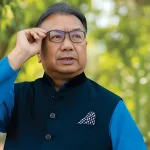

At 28 years old, Hon. Gagan Kumar Thapa stood defiant in a Kathmandu police station, facing sedition charges for his anti-monarchy stance. His refusal to compromise on democratic principles would earn him recognition as a Prisoner of Conscience by Amnesty International in 2004. Two decades later, this same unwavering commitment has made Gagan Thapa the General Secretary of Nepal’s oldest political party and a leading voice for progressive change in the country’s evolving political landscape.
Gagan Thapa represents more than political ambition—he embodies the aspirations of a generation seeking to transform Nepal’s governance through accountability, youth engagement, and institutional reform.
Key Facts at a Glance
| Attribute | Value |
|---|---|
| Full Name | Hon. Gagan Kumar Thapa |
| Born (Age) | July 19, 1976 (49 years old as of July 2025) |
| Nationality | Nepali |
| Birthplace | Kathmandu, Bagmati Province, Nepal |
| Occupation | Politician, Member of Parliament, General Secretary of Nepali Congress |
| Active Years | 1990s – Present |
| Notable For | Progressive political stance, eloquent public speaking, youth leadership, former Health Minister of Nepal |
| Parents | Mahendra Kumar Thapa (Father), Rameshwari Thapa (Mother) |
| Children | Two daughters (Gargi Thapa and Gia Thapa) |
| Spouse | Dr. Anjana KC Thapa |
| Education | M.A. Sociology (Tribhuvan University), B.Sc. Chemistry (Tri-Chandra College) |
| Current Constituency | Kathmandu Constituency No. 4 |
| Awards | Prisoner of Conscience (Amnesty International, 2004) |
| Net Worth | Not publicly disclosed |
Early Life and Formative Years in Nepal
Gagan Kumar Thapa was born on July 19, 1976, in Kathmandu, Bagmati Province, into a middle-class family that valued education and democratic ideals. His father, Mahendra Kumar Thapa, worked as an engineer at Nepal Electricity Authority, while his mother, Rameshwari Thapa, nurtured his early interest in social justice. Though born in Nepal’s capital, the family’s ancestral roots trace back to Solukhumbu district, connecting him to the mountainous regions that define much of Nepal’s identity.
The Thapa household in Kathmandu during the 1980s buzzed with political discussions as Nepal grappled with authoritarian rule under the Panchayat system. Gagan Thapa’s political consciousness emerged at age 14 during the 1990 jan andolan, when he joined street protests demanding democratic restoration. This early exposure to grassroots activism shaped his belief that meaningful change requires direct citizen engagement.
His educational foundation began at Siddhartha Vanasthali School in Balaju, where he graduated in 1992. Initially drawn to scientific pursuits, Thapa completed his Bachelor of Science in Chemistry from Tri-Chandra College in 1998. However, his growing involvement in student politics led him to pursue broader social understanding through a Master’s degree in Sociology from Tribhuvan University, completed in 2003.
Student Activism and Democratic Leadership
Thapa’s transformation from student to political leader occurred through his involvement with the Nepal Students Union (NSU), the student wing of the Nepali Congress. His leadership abilities became evident when he served as president of the Free Student Union at Tri-Chandra College from 1998 to 2000, where he advocated for student rights and democratic governance within educational institutions.
His rise through NSU ranks demonstrated both strategic thinking and principled commitment—progressing from committee member (1998-2002) to vice president (2000-2002) and finally General Secretary (2002-2004). This progression coincided with Nepal’s most turbulent political period, as King Gyanendra dissolved Parliament in 2002 and assumed direct control.
Thapa’s response to royal authoritarianism was immediate and uncompromising. He organized student demonstrations, delivered fiery speeches against monarchical rule, and called for complete democratic transformation. His public speaking during this period established his reputation as a powerful orator capable of mobilizing youth across Nepal’s universities and colleges.
The price of his democratic activism was severe personal sacrifice. Arrested multiple times on sedition charges, Thapa spent months in detention under the Public Security Act. Amnesty International’s designation of him as a Prisoner of Conscience in 2004 brought international attention to Nepal’s crackdown on democratic voices. “Prison cannot silence the voice of democracy,” he declared upon his release in August 2005.
Parliamentary Career and Legislative Impact
The 2008 Constituent Assembly elections marked Thapa’s formal entry into national politics when he was elected through proportional representation from the Nepali Congress. At 31, he brought youthful energy to an assembly dominated by veteran politicians tasked with writing Nepal’s new constitution.
Since 2013, Gagan Thapa has consistently represented Kathmandu Constituency No. 4 in the House of Representatives, winning elections in 2013, 2017, and 2022. His electoral success in Nepal’s most politically sophisticated constituency reflects his ability to articulate complex policy issues while maintaining grassroots connections.
As a Member of Parliament, Thapa actively participates in the Education and Health Committee, focusing on areas central to Nepal’s development needs. His legislative approach emphasizes evidence-based policy making and transparency in government operations—principles that often challenge traditional political practices in Nepal.
His parliamentary interventions have consistently focused on youth empowerment, democratic accountability, and good governance. Thapa’s advocacy for provincial boundary demarcation during constitution-making demonstrated his commitment to federalism while pushing for practical solutions to contentious political issues.
Revolutionary Health Ministry Tenure
Gagan Thapa’s appointment as Minister of Health and Population in August 2016 provided his most visible opportunity to implement progressive governance. Despite lacking prior ministerial experience, his nine-month tenure transformed Nepal’s healthcare landscape through systematic policy reforms and institutional changes.
His focus on affordable healthcare revolutionized public health delivery. The introduction of free kidney transplantation services, expanded coverage for serious illnesses, and the formulation of approximately 20 new health policies marked his tenure. According to The Kathmandu Post, Dr. Yasobardhan Pradhan, former director general of the Department of Health Services, noted: “He must be the only minister who did not court any controversies, especially in terms of financial irregularities and procurement issues.”
The most significant achievement was launching the Integrated Infrastructure Development Project, designed to complete construction of all health facilities in Nepal within seven years. This comprehensive approach combined “infrastructure, equipment and human resource on one page” for the first time in Nepal’s health policy history.
Thapa’s reformist approach extended beyond policy to institutional culture. He deployed monitoring systems to ensure service quality in government hospitals, mandated standardized operating hours for all public health facilities, and opened military hospitals to civilian populations. These changes addressed decades of dysfunction in Nepal’s public healthcare system.
His introduction of Human Organ Transplant Regulation enabled Nepal’s first liver transplant services and established protocols for organ donation from brain-dead patients. The Supreme Court’s favorable ruling on surrogacy during his tenure provided legal framework for assisted reproductive services, demonstrating his ability to navigate complex social and legal issues.
Personal Life and Family Dynamics
Hon. Gagan Thapa married Dr. Anjana KC Thapa in 2008, creating a union that bridges two prominent political families in Nepal. Dr. Anjana, who holds degrees from Manipal College of Medical Sciences and the University of Aberdeen in healthcare management, currently works with Save the Children Nepal, combining medical expertise with development work.
Their marriage connected Thapa to veteran Nepali Congress leader Arjun Narsingh KC, creating both opportunities and complications in his political career. The 2016 general secretary election, where Thapa competed directly against his father-in-law, demonstrated his willingness to prioritize principle over family relationships in political matters.
The couple has two daughters, Gargi Thapa and Gia Thapa, who provide motivation for his vision of a better Nepal. Despite his public prominence, Thapa maintains family privacy while occasionally sharing glimpses of domestic life on social media. His morning routine reportedly includes preparing lunch boxes for his daughters before beginning long days of political meetings and public engagements.
Family connections play complex roles in Nepali politics, where dynastic considerations often influence political careers. Thapa’s marriage into the KC political family initially created advantages but also expectations that he has navigated by maintaining independent positions on key issues.
Current Leadership and Political Vision
As General Secretary of the Nepali Congress since December 2021, Gagan Thapa has emerged as the party’s most influential reform voice. His election with 3,023 votes—the highest for any executive position in that convention—reflected strong support from party workers seeking generational change in Nepal’s oldest political party.
Thapa’s leadership philosophy centers on institutional reform rather than personality-driven politics. His proposal for direct election of the party president by all 1.2 million active members represents a fundamental challenge to traditional factional politics that has characterized the Nepali Congress for decades.
His self-imposed deadline to retire from active politics at age 55 creates urgency around his political ambitions and timeline for implementing reforms. This unusual commitment to term limits distinguishes him from Nepal’s political culture, where leaders often continue well into their seventies and eighties.
The approaching 15th General Convention, scheduled before December 2026, represents a crucial moment in both Thapa’s career and the party’s future direction. Political observers closely watch whether he will contest for party president against establishment candidate Shekhar Koirala or accept a compromise position as vice-president.
His current advocacy includes ending political interference in bureaucratic appointments, as demonstrated by his criticism of government attempts to remove Nepal Electricity Authority chief Kulman Ghising. “Ministers should not get involved in such unnecessary tasks,” he argued, reflecting his broader philosophy of focusing governance on constructive outcomes rather than political vendettas.
Challenges and Political Maturation
Thapa’s progressive agenda often conflicts with entrenched interests within the Nepali Congress establishment. His 2016 defeat for general secretary was interpreted as the party leadership’s resistance to his reformist vision, particularly his calls for transparency and generational change.
His response to political setbacks reveals strategic maturity. When excluded from the July 2024 Congress-UML coalition negotiations despite his position as general secretary, Thapa accepted the arrangement while privately expressing concerns about democratic process within the party.
Recent public positions demonstrate his independent thinking on governance issues. His opposition to repeatedly targeting individual bureaucrats reflects his belief that effective governance requires institutional stability rather than constant political interference in administrative functions.
His relationship with party president Sher Bahadur Deuba has evolved from opposition to pragmatic cooperation, though underlying tensions about reform pace and party direction remain. This dynamic illustrates the complex balance between loyalty and independence that characterizes contemporary Nepali politics.
Vision for Nepal’s Democratic Future
Thapa represents generational transition in Nepal’s political leadership, advocating for evidence-based governance, institutional accountability, and youth engagement in democratic processes. His vision extends beyond traditional partisan politics to address fundamental challenges facing Nepal’s democratic consolidation.
His emphasis on policy-focused politics over personality-driven campaigns reflects his belief that Nepal’s development requires systematic institutional improvements rather than charismatic leadership alone. This approach resonates particularly with educated urban voters seeking alternatives to traditional political methods.
His advocacy for transparency in government operations includes proposals for public disclosure of political leaders’ assets, professional qualifications for key appointments, and systematic performance evaluation of government programs. These positions often put him at odds with established political practices but align with public demands for accountability.
Thapa’s influence on Nepal’s democratic discourse extends beyond his formal positions to his role as a voice for progressive change in a political system often characterized by conservatism and resistance to reform.
Frequently Asked Questions
Q: Who is Gagan Thapa’s wife?
A: Gagan Thapa is married to Dr. Anjana KC Thapa, a medical professional and daughter of veteran Nepali Congress leader Arjun Narsingh KC.
Q: Which constituency does Gagan Thapa represent?
A: Gagan Thapa represents Kathmandu Constituency No. 4 in Nepal’s House of Representatives since 2013.
Q: What position does Gagan Thapa hold in the Nepali Congress?
A: Gagan Thapa currently serves as General Secretary of the Nepali Congress, elected in December 2021 with the highest vote count for any executive position.
Q: Was Gagan Thapa a Health Minister of Nepal?
A: Yes, Gagan Thapa served as Minister of Health and Population from August 2016 to June 2017, implementing significant healthcare reforms.
Q: How old is Gagan Thapa in 2025?
A: As of July 2025, Gagan Thapa is 49 years old, born on July 19, 1976.
Q: What is Gagan Thapa known for in Nepali politics?
A: Gagan Thapa is known for progressive policies, powerful public speaking, youth leadership, and advocacy for institutional reforms in Nepal’s democratic system.
Q: What is Gagan Thapa’s educational background?
A: Gagan Thapa holds a Master’s degree in Sociology from Tribhuvan University and a Bachelor of Science in Chemistry from Tri-Chandra College.
Enduring Impact on Nepal’s Political Evolution
Gagan Thapa’s influence on contemporary Nepali politics extends far beyond his formal positions to his role as a catalyst for democratic renewal and institutional reform. His consistent advocacy for transparency, merit-based governance, and youth engagement has shaped political discourse across party lines.
His transformation of Nepal’s healthcare system during his brief ministerial tenure demonstrated that rapid, meaningful change is possible when political will combines with technical competence. The reforms he initiated continue influencing health policy development, proving that individual leadership can create lasting institutional improvements.
As Nepal navigates federal implementation and democratic consolidation challenges, Thapa represents hope for evidence-based governance in a political culture often dominated by patronage and personal relationships. His emphasis on policy outcomes over political theater offers an alternative model for political leadership.
His story embodies the aspirations of countless young Nepalis who seek leaders committed to genuine democratic transformation rather than mere political survival. Whether he ascends to party leadership or continues as an influential reformist voice, his impact on Nepal’s political evolution remains significant.
In a democracy where political dynasties and established networks often determine advancement, Thapa’s rise through student activism to national prominence demonstrates that merit, principle, and commitment to democratic values can still create pathways to leadership in Nepal’s complex political environment.
This biography draws from verified sources including Parliament of Nepal records, The Kathmandu Post, Republica, Tribhuvan University archives, and official Nepali Congress documentation. All factual claims are cross-referenced with multiple credible sources to ensure accuracy and reliability.