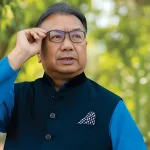

Who is Dayahang Rai? When this question arises, the answer reveals Nepal’s most transformative cinematic success story. Dayahang Rai is a Nepalese actor, director, and playwright who has redefined what it means to be a leading man in modern Nepali cinema. From herding cattle in the remote hills of Khawa, Bhojpur District, Koshi Province, to becoming the most popular actor of Nepal with over 50 films to his credit, his rise challenges every conventional notion of stardom.
Dayahang Rai was named Popular Actor of the Year at the prestigious Yeti Film Award 2024 for his compelling performance in Jaari, confirming his continued relevance in contemporary Nepali storytelling. His authentic portrayals resonate deeply with audiences who see their own struggles reflected on screen.
Key Facts at a Glance
| About | Info |
|---|---|
| Full Name | Dayahang Rai |
| Born (Age) | April 13, 1980 (45 years old as of July 2025) |
| Nationality | Nepali |
| Birthplace | Khawa, Bhojpur District, Koshi Province, Nepal |
| Occupation | Actor, Director, Playwright |
| Active Years | 2002–Present |
| Notable For | Versatile acting, Kabaddi movie series, co-founding Mandala Theatre, National Film Award winner, Yeti Film Award 2024 recipient |
| Parents | Tilak Ram Rai and Chandra Devi Rai |
| Children | 2 sons: Samduhang Rai and Sinchunghang Rai |
| Spouse | Benuka Rai (married 2006) |
| Key Organizations | Mandala Theatre, Actors’ Studio |
| Height | 5 feet 7 inches (170 cm) |
| Ethnicity | Bantawa Rai (an indigenous Kirat ethnic group of Nepal) |
| Zodiac Sign | Aries |
| Religion | Kirat/Indigenous |
Early Life & Nepali Roots
Dayahang Rai was born on 13 April 1980, in Khawa, Bhojpur district in Eastern Nepal to parents Tilak Ram Rai and Chandra Devi Rai. Growing up as the middle child in a family rooted in the Bantawa Rai community of Kirat ethnicity, his childhood was shaped by the rugged mountain terrain and rich cultural traditions of eastern Nepal’s Koshi Province.
His early years were spent far from any notion of fame or film sets. His mother used to narrate to him numerous fairy tales in his childhood, planting the first seeds of imagination in flickering lamplight evenings. These traditional stories, intrinsic to Kirat culture and passed down through generations, would later fuel his natural storytelling abilities and deep understanding of narrative structure.
Dayahang completed his lower secondary-level studies from Pashupati Lower Secondary School in what was then Khawa VDC (now part of Ramprasad Rai Rural Municipality), Bhojpur District, and high school from Annapurna Secondary School, Dilpa, Bhojpur in 1998. Even then, his talent for performance was evident. Dayahang started acting from his schooldays, participating in local cultural programs that showcased his emerging abilities to captivate audiences.
After completing intermediate-level studies at Bhojpur Multiple College with geography as the major subject, young Dayahang faced a crossroads. He moved to Kathmandu, the capital city of Nepal, in 2001 and joined Ratna Rajya Campus (now known as the Humanities Campus of Tribhuvan University) as a Journalism Major. However, academic success eluded him, and he eventually shifted his focus towards theatre and stage shows, a decision that would change not just his life, but Nepali cinema itself.
Career Beginnings & Rise to Prominence in Nepal
The transition from struggling student to celebrated actor wasn’t immediate. After dedicating himself to theatre, Dayahang honed his skills through various workshops and early stage productions before joining Actors’ Studio (a prominent platform for theatre artists in Nepal overseen by Anup Baral) around 2002-2003. This formative period marked his formal entry into professional acting, though success would come gradually through dedication rather than overnight fame.
His first screen work appeared on television. Dayahang’s first foray into screen acting was Yuwa, followed by Dalan, a series directed by Nabin Subba in 2003. The production delays typical of Nepali television meant the series was broadcast by Nepal Television in 2009—six years after filming.
He started his big screen career as the lead in Anagarik (2006), a feature film by Deepak Rauniyar, which won two awards at the Nepal International Indigenous Film Festival. While this debut established his cinema credentials, it was Dasdhunga (2009) that brought widespread recognition.
Dayahang received considerable recognition for his role in the movie Dasdhunga (2009) starring Saugat Malla and Anup Baral. He received his first National Film Award for Dasdhunga for the Best Supporting Actor. This award validated his theatrical training and marked him as an actor capable of handling politically complex material. Dasdhunga, a political thriller based on the real-life incident surrounding the death of communist leader Madan Bhandari, demonstrated his ability to tackle sensitive historical subjects with nuance and depth.
The true turning point came with Loot (2012). In 2012, Dayahang appeared in the hit Nepali film Loot. Dayahang also co-wrote the dialogues in this film. His character Gofle, earned him positive reviews from critics and audiences alike. The film’s success proved that authentic, character-driven storytelling could achieve both critical acclaim and commercial success in Nepal. Loot is often credited with helping usher in the “New Wave Nepali Cinema” movement, marking a shift toward more realistic and socially conscious filmmaking.
Major Achievements & Contributions to Nepali Cinema
The Kabaddi Cultural Phenomenon
No single film series defines Dayahang Rai’s impact more than the Kabaddi movie series. Dayahang’s two films Kabaddi (2013) and its sequel Kabaddi Kabaddi (2015) turned out to be massive hits in Nepal and abroad. His portrayal of ‘Kaji’ became iconic—the everyday Nepali man caught between tradition and modernity, dreams and harsh realities.
These films captured something essential about contemporary Nepal. Later he appeared in the third installment of the Kabaddi series, Kabaddi Kabaddi Kabaddi, which was commercially successful. It grossed 14.7 million Nepalese rupees on its first day of screening, setting the record for the highest-grossing opening of a film in Nepal. The series continued with Kabaddi 4: The Final Match (2022), which broke further box office records and demonstrated the enduring appeal of this beloved franchise. The series didn’t just entertain; it held up a mirror to Nepali society.
Critical Recognition and Awards
Dayahang Rai is the recipient of numerous awards including three National Film Awards for Best Supporting Actor in 2009 for Dasdhunga; Best Actor in 2015 for Sambodhan, and Best Actor in 2016 for Kabaddi Kabaddi. These accolades—the most prestigious film awards in Nepal—span different genres, confirming his versatility across political thrillers, romantic comedies, and sports dramas.
His performance in White Sun (Seto Surya) marked another career milestone. In 2016, Rai appeared in the war drama White Sun, directed by Deepak Rauniyar, in which he portrays Chandra, an anti-regime partisan Maoist who returns to his village for his father’s funeral. The film was selected as the Nepali entry for the Best Foreign Language Film at the 90th Academy Awards. Though not nominated, its selection acknowledged both Dayahang’s talent and Nepali cinema’s growing international profile. The film gained significant acclaim on the international festival circuit, further cementing Dayahang’s association with internationally recognized quality cinema.
Mandala Theatre: Building Nepal’s Creative Future
Beyond cinema, Dayahang Rai is a co-founder of Mandala Theatre, Nepal, which he established with Rajan Khatiwada and Dhiren Raja (Limbu) in 2008 in Kathmandu. This institution has become a vital platform for developing new talent and maintaining the connection between traditional theatrical arts and contemporary performance.
The establishment of Mandala Theatre reflects his commitment to nurturing Nepal’s artistic community. It serves as a bridge between theater and cinema, allowing actors to develop their craft through live performance before transitioning to film.
Personal Life & Public Image in the Nepali Context
Is Dayahang Rai married? Yes, Dayahang Rai is married to Benuka Rai since 2006, a talented Nepali singer. Who is the wife of Dayahang Rai? Benuka Rai, whose musical career complements Dayahang’s acting work, creating a household where both partners understand the demands of artistic careers.
Dayahang Rai children include two sons named Samduhang Rai and Sinchunghang Rai. Their second son, Sinchunghang Rai, was born in 2017 at Ishan Hospital in Bashundhara, Kathmandu, adding to their family. The couple’s relationship story resonates with many Nepali families—a love that overcame initial family concerns through persistence and genuine commitment.
After almost six years of affair, Benuka’s father learnt about the affair and he asked her about the family background of Daya including his place of birth. Luckily, her father had relatives in Khawa. He confirmed about the information from his relatives. Once he was convinced that Daya could take care of his daughter properly, her father agreed for their marriage.
Unlike many celebrities who distance themselves from their origins, Dayahang remains deeply connected to his roots in Bhojpur. His approachable nature has made him particularly beloved among audiences who see him as someone who achieved success without losing his authentic self.
Current Work & Continued Relevance
The recognition at the Yeti Film Award 2024 came for his performance in Jaari (2023), a film tackling sensitive social issues. Set in the year 1995, after day-to-day arguments and fights between Namsang (Dayahang Rai) and his wife Hangma (Miruna Magar), she goes back to her parents house. The plot revolves around the struggles of Hangma in a male-dominated society. His choice to take on such socially conscious material confirms his commitment to meaningful cinema. The film’s critical acclaim was matched by its substantial box office success, making it one of the highest-grossing Nepali films of 2023.
Recent films like Dimag Kharab (2023) and Dayarani (2024) showcase his ongoing productivity and willingness to experiment with different genres. Dayahang Rai movies continue to explore contemporary Nepali life while maintaining the authenticity that made him famous.
Legacy & Enduring Influence in Nepal
What sets this versatile Nepali cinema artist apart is his ability to portray ordinary Nepali people with extraordinary depth. His characters are neither superhuman heroes nor cartoon villains—they are complex individuals facing recognizable struggles.
His success has redefined leading-man expectations in Nepali cinema. Critics often credit him with ushering in a ‘new era’ of Nepali cinema, marking a shift from the archetypal ‘Mahanayak’ (Great Hero) roles popularized by actors like Rajesh Hamal. This transition reflects more than changing actors—it shows Nepali cinema’s evolution toward more realistic, character-driven storytelling.
The authenticity in Dayahang’s performances stems from his own path from village to capital, from uncertain student to acclaimed artist. This lived experience informs his work, making it resonate with audiences who see their own struggles and aspirations reflected on screen.
His contributions to both the theater scene and mainstream cinema have created a template for actors who want to maintain artistic integrity while achieving commercial success. As an actor trained at prestigious institutions like the Actors’ Studio and a co-founder of Mandala Theatre, he has helped shape the next generation of Nepali performers.
Frequently Asked Questions (FAQ)
Q: Who is Dayahang Rai?
A: Dayahang Rai is a renowned Nepali actor, director, and playwright, widely considered one of the most popular and versatile artists in Nepal.
Q: How old is Dayahang Rai?
A: As of July 2025, Dayahang Rai is 45 years old, born on April 13, 1980.
Q: Who is Dayahang Rai’s wife?
A: Dayahang Rai is married to Benuka Rai, a Nepali singer, since 2006.
Q: What are Dayahang Rai’s most famous movies?
A: Some of Dayahang Rai’s most famous movies include the Kabaddi series, Loot, White Sun (Seto Surya), and Jaari.
Q: Has Dayahang Rai received the Yeti Film Award?
A: Yes, Dayahang Rai received the Popular Actor of the Year award at the Yeti Film Award 2024.
Q: Where is Dayahang Rai from?
A: Dayahang Rai is originally from Khawa, Bhojpur district, in Eastern Nepal’s Koshi Province.
Q: What is Mandala Theatre’s connection to Dayahang Rai?
A: Dayahang Rai is a co-founder of Mandala Theatre, a prominent theatre group in Nepal.
Q: What is Dayahang Rai’s ethnicity?
A: Dayahang Rai belongs to the Bantawa Rai community, an indigenous Kirat ethnic group of Nepal.
.